
The independent heating and cooling company across Kentucky and the Ohio Valley
Your CO Alarm Went Off
If your carbon monoxide alarm is sounding right now, stop reading and get everyone outside, then call 911 or your gas utility from outside. Carbon monoxide has no smell and no color, and you cannot tell by sniffing. Once the fire department or the utility has cleared the house, we can look at the heating equipment that caused it. Below is what to do, in order.
Call (888) 414-3292- A real person answers
- Open 7 days
- Written quote before work starts
Taking calls until 5:00 PM ET
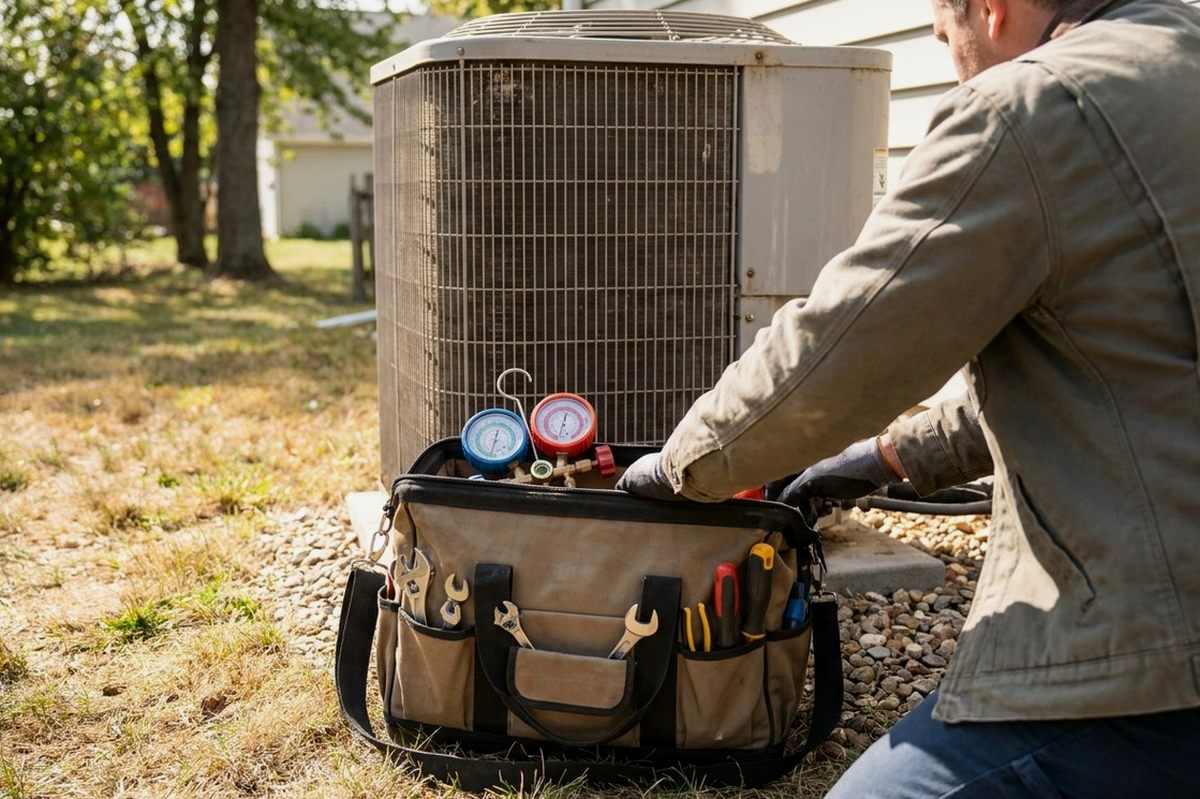
Derby City Comfort service team · field-reviewed before publishing
The First Five Minutes, In Order
1. Get every person and pet out of the house and into fresh air. Do not stop to gather things. 2. From outside, call 911 or your gas utility's emergency line. Both will come out and take readings. 3. Do a head count. If anyone has a headache, nausea, dizziness, confusion or is unusually sleepy, tell the dispatcher, because those are symptoms of exposure and they need medical attention. 4. Stay outside until responders tell you the house is safe to enter. 5. Leave the doors as they are. Do not go back in to open windows. Once the building is cleared, call us to find the source in your heating system.
What Not To Do
Do not silence the alarm and go back to bed. That is the single most common mistake we hear about, usually after a cold night when the furnace has been running hard. Do not assume a low battery. A chirp every minute is a battery warning, but a loud repeating pattern is a real reading. Do not open up the furnace, water heater or any gas connection yourself, and do not try to relight a pilot. Do not run a generator, grill, camp stove or vehicle in a garage or basement while you wait. If you smell gas as well as hearing the alarm, leave immediately and call 911 or the gas utility first.
Where Carbon Monoxide Usually Comes From
In the homes we work in across Kentucky, Indiana, Ohio, Illinois, Tennessee and West Virginia, the usual sources are a cracked heat exchanger in a gas furnace, a blocked or disconnected flue, a corroded vent pipe in a basement, or a water heater that is backdrafting because the house is tighter than it used to be. Older houses with masonry chimneys are common culprits when the liner has deteriorated. Any fuel-burning equipment can do it: furnace, boiler, water heater, wall heater, fireplace, space heater. Combustion needs a clear path out of the building, and when that path fails, the exhaust comes back in.
When To Call Us, And What We Do
Call us after responders have cleared the building, or the next morning if it happened overnight. We inspect the furnace or boiler, check the heat exchanger for cracks, pull the burners and look at flame pattern and soot, test draft at the flue, and check the vent connector and chimney for blockage or separation. We also check whether the equipment is getting enough combustion air, which is a frequent problem in remodeled basements. If we find a heat exchanger crack or an unsafe vent, we shut the equipment down and tell you plainly what it will take to make it safe. We do heating repair, heater repair and furnace repair, and we will not put a system back in service that is producing carbon monoxide.
Keeping It From Happening Again
Put a carbon monoxide alarm on every floor and near sleeping areas, and replace the units themselves every seven to ten years because the sensors wear out. Test them monthly and change batteries on a schedule you can remember. Have fuel-burning heating equipment checked before each heating season, especially if the furnace is over fifteen years old or the flue runs through an unheated space. Keep dryer vents and combustion air openings clear, and never block a floor register in a room with a furnace closet. Safe checks you can do yourself are limited to thermostat settings, breakers, changing the filter and confirming vents are open. Everything involving gas, refrigerant or high voltage should be left to us.
Your CO Alarm Went Off — what people ask
My alarm went off once and then stopped. Do I still need to worry?
Yes. An alarm that sounds and then clears means carbon monoxide reached a level high enough to trigger it and then dispersed. Something produced it. Have the heating equipment and venting inspected before you use it again.
Can a dirty filter cause carbon monoxide?
A badly clogged filter can restrict airflow and overheat a furnace, which stresses the heat exchanger over time and can lead to cracks. It is not a direct cause, but it is a contributing one. Change filters regularly.
How do I know if my heat exchanger is cracked?
You usually cannot tell by looking. It takes pulling the burners and inspecting with a camera and mirror, plus combustion and draft testing. Flickering or rolling burner flames and soot are warning signs worth a call.
How it works
- Step 1
Tell us the symptom
Call or fill in the quote form. We ask what changed, when it started, and what the thermostat reads. That short conversation tells us whether you need a visit today or tomorrow morning.
- Step 2
We diagnose on site
A technician checks the thermostat, the electrical side, airflow through the filter and ducts, and the equipment itself. We find the actual cause instead of swapping parts and hoping the noise goes away.
- Step 3
You decide before we work
We explain what failed, what the repair involves, and what we would do if it were our own house. Nothing gets replaced until you say go. Then we test the system before leaving.
- A real person answers
- Open 7 days
- Written quote before work starts
Why homeowners call us
- Old houses and new onesWe are used to century-old homes with retrofitted ductwork and 1970s subdivisions with original returns. Tight crawl spaces, low basement headroom and odd attic runs are normal parts of the day for us, not surprises that stall the job.
- Built for the swingsHumid summers push AC systems hard and January freezes expose weak igniters and cracked flues. We repair for both extremes across the region, so the fix holds when the weather turns instead of failing the first hard week.
- Air conditioning and heating bothAir conditioner repair in July, heating repair in January, and the IAQ and airflow problems that hide in between. One crew that knows how your cooling and heating share the same blower and the same duct system.
- Plain talk, no pressureWe tell you when a repair makes sense and when replacement is the honest answer. No scare tactics about your BTU load, no upsell scripts. You get the condition of the system and a clear next step.
- All major brands, gas & electricEvery major HVAC brand, gas and electric, handled by an independent crew.
- Straight answersIf a system is not worth repairing, we say so, often right on the phone.
About this guide
Past the safe checks, it's a job for tools and a meter
Bring your notes from the checks to the call and booking takes no time.
- A real person answers
- Open 7 days
- Written quotes
- All major brands
- Gas & electric
Rather not call? Get a free quote →