
The independent heating and cooling company across Kentucky and the Ohio Valley
No Heat at All
Your house is cold, the thermostat is calling for heat, and nothing happens. No fan, no burner, no warm air at the vents. We handle heating repair and furnace repair for homeowners across Kentucky, Indiana, Ohio, Illinois, Tennessee and West Virginia, and a total no-heat call is one of the most common things we see once the first hard freeze lands. Here is how we work through it in order.
Call (888) 414-3292- A real person answers
- Open 7 days
- Written quote before work starts
Taking calls until 5:00 PM ET
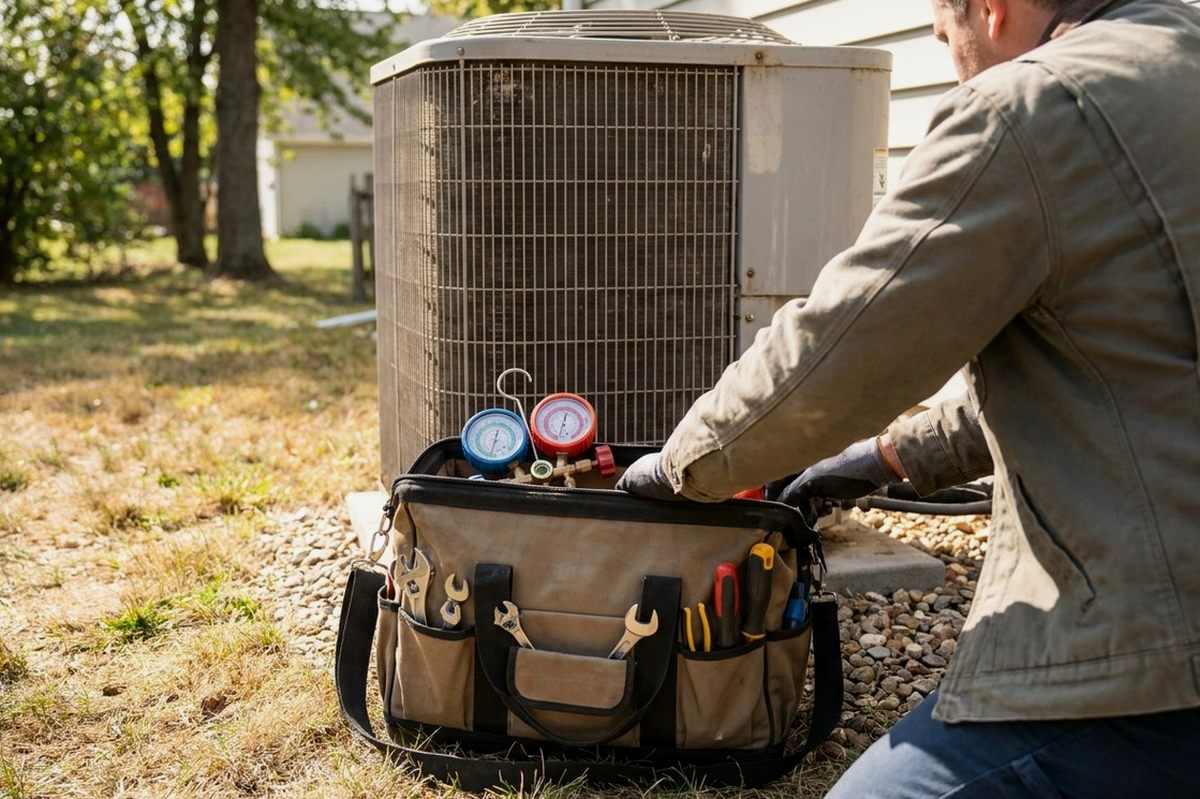
Derby City Comfort service team · field-reviewed before publishing
First: If You Smell Gas or Your CO Alarm Is Sounding
Leave the building right away. Take everyone with you, do not flip switches, and do not go looking for the source. Once you are outside, call 911 or your gas utility's emergency line from a safe distance. Let them clear the house before anyone goes back in. After that, call us and we will inspect the heat exchanger, the burners, the flue and the gas connections to find out what caused it. A rotten egg smell near a basement furnace, a soot mark around the burner compartment, or a carbon monoxide alarm are all reasons to stop reading and get out. Nothing else in this guide matters until that is handled.
What "No Heat at All" Actually Tells Us
There is a difference between a system that runs and blows cool air and a system that does nothing. Total silence usually points to power, controls or a safety lockout, meaning the furnace decided not to fire. Air moving but never warming points more toward ignition, gas supply or a flame sensor. A short burst of heat that quits after a minute or two is a different animal again, often overheating or a blocked flue. Tell us which of those three you have when you call. In a century-old house with a basement furnace and long duct runs, that one detail saves a lot of guessing.
The Usual Cause Families, Cheapest First
Start with controls and power. Dead thermostat batteries, a thermostat bumped to cool or to fan-only, a tripped breaker or the furnace switch on the basement wall being switched off account for a real share of no-heat calls. Next up is airflow. A filter packed solid after a dusty fall makes the furnace overheat and lock itself out on a limit switch. Third is ignition and flame sensing, which is the igniter, flame sensor or gas valve not doing its job. Fourth and least common is the expensive family, a cracked heat exchanger, failed control board or a dead blower motor.
What You Can Safely Check Yourself
Five things, and only these five. Put fresh batteries in the thermostat and confirm it is set to heat with the target well above room temperature. Check your electrical panel for a tripped breaker and reset it once. Look at the filter and change it if light will not pass through. Walk the house and open any supply and return vents that got closed off or blocked by furniture. If your system has an outdoor unit, clear leaves and snow away from it. Stop there. Gas lines, refrigerant and high-voltage wiring are ours, not yours, and there is no safe homeowner version of that work.
What a Technician Does Differently
We read the furnace instead of guessing at it. The control board flashes a fault code, and that code tells us whether the board saw a pressure switch stay open, a limit trip, or a failed ignition attempt. We put a meter on the igniter, measure microamps on the flame sensor, check gas pressure at the manifold, and confirm the inducer and flue are actually pulling. Then we look for the reason behind the reason, because a limit trip is often a duct problem and a flame sensor failing early can point to combustion air. That is the difference between heater repair that lasts and a part swap that fails again in February.
No Heat at All — what people ask
Why does my furnace start and then shut off after a minute?
That is usually a safety device doing its job. A clogged filter, closed vents or a blocked flue makes the furnace overheat and lock out, or a flame sensor fails to confirm the burner lit. Change the filter, open vents, then call us.
Can I just reset the breaker and keep going?
Reset it once. If it trips again, stop and call us. A repeat trip means something is drawing more current than it should, often a failing blower motor or a wiring fault, and repeated resets risk damage or fire.
How cold is too cold to wait for heating repair?
If indoor temperatures are dropping toward the 40s, pipes are at risk and so are older adults and small children. Tell us that when you call so we can prioritize. Meanwhile keep faucets dripping and interior doors open.
How it works
- Step 1
Tell us the symptom
Call or fill in the quote form. We ask what changed, when it started, and what the thermostat reads. That short conversation tells us whether you need a visit today or tomorrow morning.
- Step 2
We diagnose on site
A technician checks the thermostat, the electrical side, airflow through the filter and ducts, and the equipment itself. We find the actual cause instead of swapping parts and hoping the noise goes away.
- Step 3
You decide before we work
We explain what failed, what the repair involves, and what we would do if it were our own house. Nothing gets replaced until you say go. Then we test the system before leaving.
- A real person answers
- Open 7 days
- Written quote before work starts
Why homeowners call us
- Old houses and new onesWe are used to century-old homes with retrofitted ductwork and 1970s subdivisions with original returns. Tight crawl spaces, low basement headroom and odd attic runs are normal parts of the day for us, not surprises that stall the job.
- Built for the swingsHumid summers push AC systems hard and January freezes expose weak igniters and cracked flues. We repair for both extremes across the region, so the fix holds when the weather turns instead of failing the first hard week.
- Air conditioning and heating bothAir conditioner repair in July, heating repair in January, and the IAQ and airflow problems that hide in between. One crew that knows how your cooling and heating share the same blower and the same duct system.
- Plain talk, no pressureWe tell you when a repair makes sense and when replacement is the honest answer. No scare tactics about your BTU load, no upsell scripts. You get the condition of the system and a clear next step.
- All major brands, gas & electricEvery major HVAC brand, gas and electric, handled by an independent crew.
- Straight answersIf a system is not worth repairing, we say so, often right on the phone.
About this guide
Safe checks done and it still misbehaves? That's a real fault
Describe what you found and we'll take it from there. Booking takes about a minute.
- A real person answers
- Open 7 days
- Written quotes
- All major brands
- Gas & electric
Rather not call? Get a free quote →