
The independent heating and cooling company across Kentucky and the Ohio Valley
When a Furnace Is Worth Fixing, and When It Isn't
Your furnace quit, or it is limping along, and somebody said the word replacement. You want a straight answer: is this thing worth fixing, or are you throwing good money at it? We do furnace repair and heating repair across Illinois, Indiana, Kentucky, Ohio, Tennessee and West Virginia, and we will tell you plainly which side of the line your unit falls on.
Call (888) 414-3292- A real person answers
- Open 7 days
- Written quote before work starts
Taking calls until 5:00 PM ET
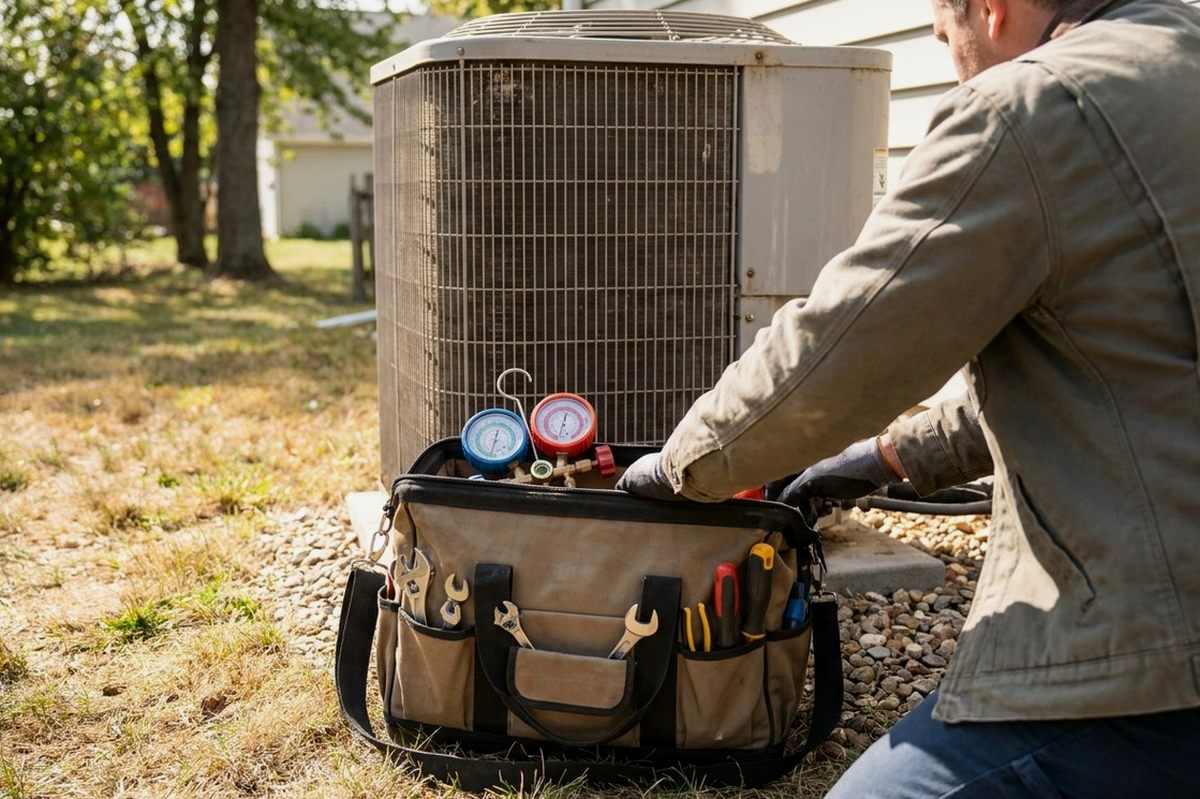
Derby City Comfort service team · field-reviewed before publishing
Age matters, but it is not the whole story
A furnace that has been running well for fifteen or eighteen winters is not automatically scrap. We have seen basement units in old houses that were installed carefully, sized right, and filters changed, still heating fine well past what anyone expected. We have also seen units half that age that were crammed into a tight closet with poor return air and cooked themselves early. So age tells us what to look for, not what to do. What we actually check is how the heat exchanger looks, how the blower and motor are running, and whether the burners are firing clean and even.
The fault type tells us more than the age does
Some failures are ordinary wear. Igniters, flame sensors, pressure switches, capacitors, blower motors and control boards are all normal parts that fail and get replaced, and replacing them on a sound furnace is money well spent. Other failures change the conversation. A cracked or rusted-through heat exchanger is a safety problem, not a maintenance item, and it is often the point where repair stops making sense. Repeat failures matter too. If the same part has burned out twice in three winters, something upstream is causing it, and we look for that cause before we quote another part.
Parts availability and whether the parts still match
Older furnaces can be perfectly repairable right up until the part stops existing. Some control boards, gas valves and inducer assemblies for discontinued models are hard to source, and a universal substitute does not always exist for what your unit needs. When we cannot get the correct part, or the only option is a used board with no warranty behind it, we say so. Matching matters in the other direction as well. If your cooling side has already been replaced and the blower and controls do not work well together, keeping the old furnace going can cost you comfort every summer as well as every winter.
How we think about it on the visit
We diagnose first and talk numbers of repairs second. That means checking the thermostat and its settings, the breaker, the filter, the return and supply airflow, then getting into the burner compartment and reading what the furnace is actually doing. We want to know whether this is one bad part on a healthy unit or one symptom of a unit coming apart. Then we lay out what the repair fixes, what it does not fix, and what we would expect to fail next. You get the honest picture and you decide. We are not going to sell you a system to solve a bad flame sensor.
Cases where replacement is the honest answer
A cracked heat exchanger, a failed unit that no longer has parts available, a furnace that has needed three separate repairs in two seasons, or a system that was badly undersized for the house from day one. Those are the situations where we tell homeowners to put the money into a replacement instead. Comfort problems count as well. If half the house never gets warm on a hard January night and the ductwork and sizing are the reason, another repair will not change that. If you smell gas or your carbon monoxide alarm sounds, leave the building first, call 911 or your gas utility, then call us.
When a Furnace Is Worth Fixing, and When It Isn't — what people ask
How do I know if my heat exchanger is cracked?
You do not diagnose that from the hallway. We inspect it visually with the burners out and test combustion behavior. Signs that bring us out include a carbon monoxide alarm, soot, or a flame that rolls or shifts when the blower starts.
Is it worth repairing a furnace that is twenty years old?
Sometimes yes. If the heat exchanger is sound, parts are available, and the failure is a normal wear item like an igniter or blower motor, a repair can carry it several more winters. We tell you which case you are in.
Can I just replace the furnace and keep my old AC?
Often yes, though it depends on how the blower, controls and refrigerant lines match up with the existing outdoor unit. We check compatibility before recommending it so you are not paying twice to fix the same airflow problem.
How it works
- Step 1
Tell us the symptom
Call or fill in the quote form. We ask what changed, when it started, and what the thermostat reads. That short conversation tells us whether you need a visit today or tomorrow morning.
- Step 2
We diagnose on site
A technician checks the thermostat, the electrical side, airflow through the filter and ducts, and the equipment itself. We find the actual cause instead of swapping parts and hoping the noise goes away.
- Step 3
You decide before we work
We explain what failed, what the repair involves, and what we would do if it were our own house. Nothing gets replaced until you say go. Then we test the system before leaving.
- A real person answers
- Open 7 days
- Written quote before work starts
Why homeowners call us
- Old houses and new onesWe are used to century-old homes with retrofitted ductwork and 1970s subdivisions with original returns. Tight crawl spaces, low basement headroom and odd attic runs are normal parts of the day for us, not surprises that stall the job.
- Built for the swingsHumid summers push AC systems hard and January freezes expose weak igniters and cracked flues. We repair for both extremes across the region, so the fix holds when the weather turns instead of failing the first hard week.
- Air conditioning and heating bothAir conditioner repair in July, heating repair in January, and the IAQ and airflow problems that hide in between. One crew that knows how your cooling and heating share the same blower and the same duct system.
- Plain talk, no pressureWe tell you when a repair makes sense and when replacement is the honest answer. No scare tactics about your BTU load, no upsell scripts. You get the condition of the system and a clear next step.
- All major brands, gas & electricEvery major HVAC brand, gas and electric, handled by an independent crew.
- Straight answersIf a system is not worth repairing, we say so, often right on the phone.
About this guide
Past the safe checks, it's a job for tools and a meter
Report what you saw during the checks and we handle the rest. A minute to book.
- A real person answers
- Open 7 days
- Written quotes
- All major brands
- Gas & electric
Rather not call? Get a free quote →