
The independent heating and cooling company across Kentucky and the Ohio Valley
HVAC Keeps Blowing the Breaker
Your AC or furnace kicks on, and a few minutes later the breaker snaps off and the house goes quiet. You reset it, it runs, it trips again. That repeat trip is the panel telling you something is drawing more current than it should. Here is what to do first, what to leave alone, and when to call us.
Call (888) 414-3292- A real person answers
- Open 7 days
- Written quote before work starts
Taking calls until 5:00 PM ET
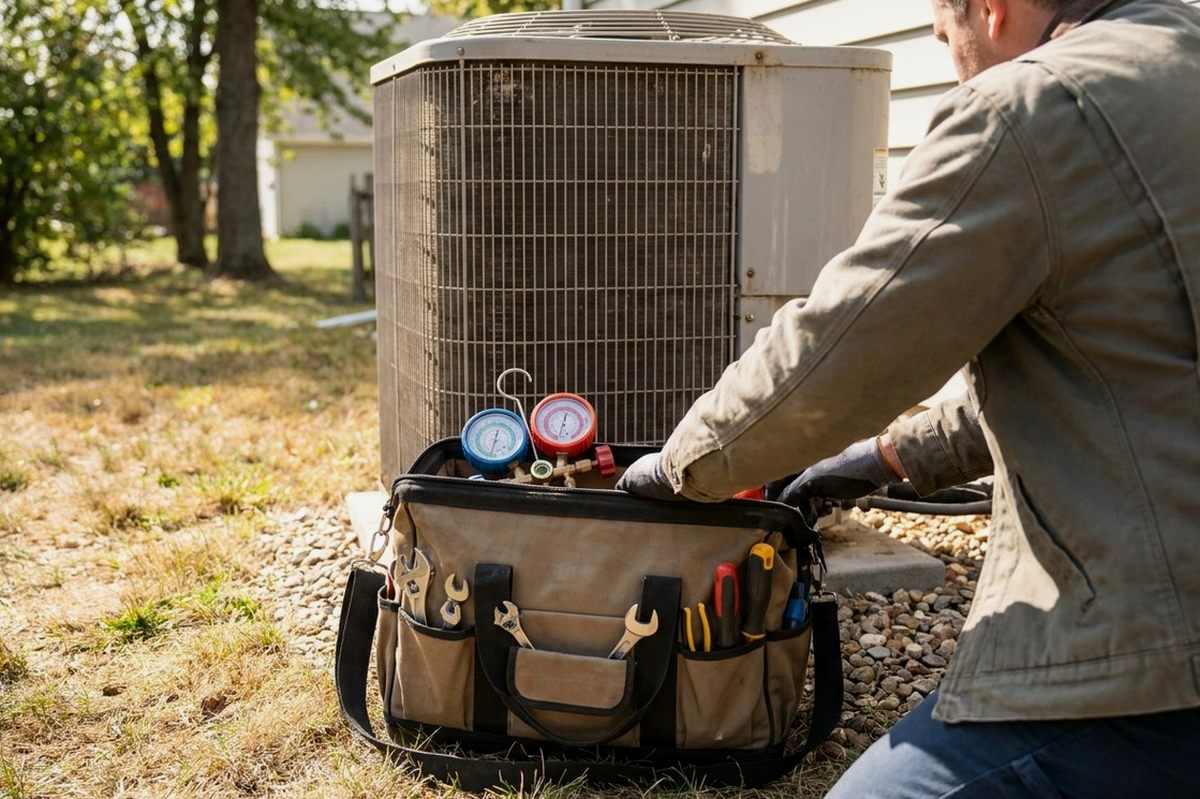
Derby City Comfort service team · field-reviewed before publishing
If You Smell Gas or Burning, Handle Safety First
A tripping breaker is usually electrical, but if you also smell gas or rotten eggs near a furnace, stop reading and act. 1. Get everyone and any pets out of the building. 2. From outside, call 911 or your gas utility's emergency line. 3. Do not flip switches, do not reset the breaker, do not use anything that sparks. 4. Once the utility says the building is safe, call us and we will look at the heating system. The same order applies if a carbon monoxide alarm sounds. Leave, call 911, then call us. If you smell hot plastic or see scorching at the panel, cut power at the main if you can reach it safely and call an electrician.
What You Can Safely Check Yourself
Once safety is settled, there are five things a homeowner can check without tools or risk. Look at the thermostat: dead batteries and a wrong mode setting cause odd short cycling. Look at the breaker itself and confirm it is fully off before you reset it once. Change the air filter if it is grey and packed, because a starved blower pulls more current. Walk out to the outdoor unit and clear leaves, grass clippings, cottonwood fluff and anything stacked against the coil. Open any closed supply vents and pull rugs off returns. That is the whole safe list. Anything past it means refrigerant, gas or high voltage, and that is our work.
What Not to Do, Even Once
Do not reset the breaker over and over. One reset is a test. A second trip is an answer, and repeated resets can heat the wiring and the breaker contacts. Do not replace a breaker with a larger one to make the tripping stop, because the breaker is sized to protect the wire, not the equipment. Do not open the electrical panel, the condenser disconnect or the furnace blower compartment. Do not touch capacitors, contactors or wiring, and do not add refrigerant. Do not tape or wedge a breaker in the on position. If the outdoor unit is humming without the fan spinning, shut it off at the thermostat and leave it off.
What Usually Causes the Trip
Repeat trips point at a handful of things we see across the region. A failing run capacitor lets the compressor or fan motor pull locked rotor current until the breaker gives up. A shorted compressor winding does the same thing, faster. Dirty coils and clogged filters make the whole system work harder and run hotter, especially through humid July stretches. In older houses we often find a compressor sharing a circuit it outgrew, or aluminum wiring at the disconnect that has loosened over decades. On the heating side, a seized blower motor or a cracked wire in a basement furnace shows up on hard January nights. Some trips are the breaker itself, worn out from years of cycling.
When to Call Us
Call us when the breaker trips twice, when it trips the moment the system starts, or when the equipment runs but the breaker feels warm. We handle air conditioning repair and heating repair for homeowners across Illinois, Indiana, Kentucky, Ohio, Tennessee and West Virginia, and electrical faults inside HVAC equipment are routine work for us. Tell us what you noticed: whether it trips on startup or after ten minutes, whether it is cooling or heating, and whether the outdoor fan spins. That narrows it before we arrive. If a breaker is tripping and no HVAC equipment is involved, you want an electrician instead, and we will say so.
HVAC Keeps Blowing the Breaker — what people ask
Is it safe to keep resetting the breaker until the technician arrives?
No. Reset once. If it trips again, leave it off and leave the system off. Repeated resets push heavy current through wiring and contacts that are already faulting, and that heat can damage the panel.
Why does my AC only trip the breaker on hot afternoons?
Heat raises head pressure and makes the compressor pull more current, so a weak capacitor or dirty coil that coasts on mild days finally exceeds the breaker limit. It is a real fault, just one that shows up under load.
Could the breaker itself be the problem instead of the HVAC system?
Yes. Breakers wear out after years of cycling and can trip below their rating. We check current draw at the equipment first, and if the system is drawing normally we point you toward the panel.
How it works
- Step 1
Tell us the symptom
Call or fill in the quote form. We ask what changed, when it started, and what the thermostat reads. That short conversation tells us whether you need a visit today or tomorrow morning.
- Step 2
We diagnose on site
A technician checks the thermostat, the electrical side, airflow through the filter and ducts, and the equipment itself. We find the actual cause instead of swapping parts and hoping the noise goes away.
- Step 3
You decide before we work
We explain what failed, what the repair involves, and what we would do if it were our own house. Nothing gets replaced until you say go. Then we test the system before leaving.
- A real person answers
- Open 7 days
- Written quote before work starts
Why homeowners call us
- Old houses and new onesWe are used to century-old homes with retrofitted ductwork and 1970s subdivisions with original returns. Tight crawl spaces, low basement headroom and odd attic runs are normal parts of the day for us, not surprises that stall the job.
- Built for the swingsHumid summers push AC systems hard and January freezes expose weak igniters and cracked flues. We repair for both extremes across the region, so the fix holds when the weather turns instead of failing the first hard week.
- Air conditioning and heating bothAir conditioner repair in July, heating repair in January, and the IAQ and airflow problems that hide in between. One crew that knows how your cooling and heating share the same blower and the same duct system.
- Plain talk, no pressureWe tell you when a repair makes sense and when replacement is the honest answer. No scare tactics about your BTU load, no upsell scripts. You get the condition of the system and a clear next step.
- All major brands, gas & electricEvery major HVAC brand, gas and electric, handled by an independent crew.
- Straight answersIf a system is not worth repairing, we say so, often right on the phone.
About this guide
Safe checks done and it still misbehaves? That's a real fault
Mention which checks you ran when you book; it speeds up the visit.
- A real person answers
- Open 7 days
- Written quotes
- All major brands
- Gas & electric
Rather not call? Get a free quote →