
The independent heating and cooling company across Kentucky and the Ohio Valley
Giving the Condenser Room to Breathe
You walk past that big metal box in the side yard most days and never think about it. Then July hits, the house will not cool down, and somebody says the outdoor unit is choked with grass clippings and a hedge growing into it. Here is what belongs around it, what does not, and how often to look.
Call (888) 414-3292- A real person answers
- Open 7 days
- Written quote before work starts
Taking calls until 5:00 PM ET
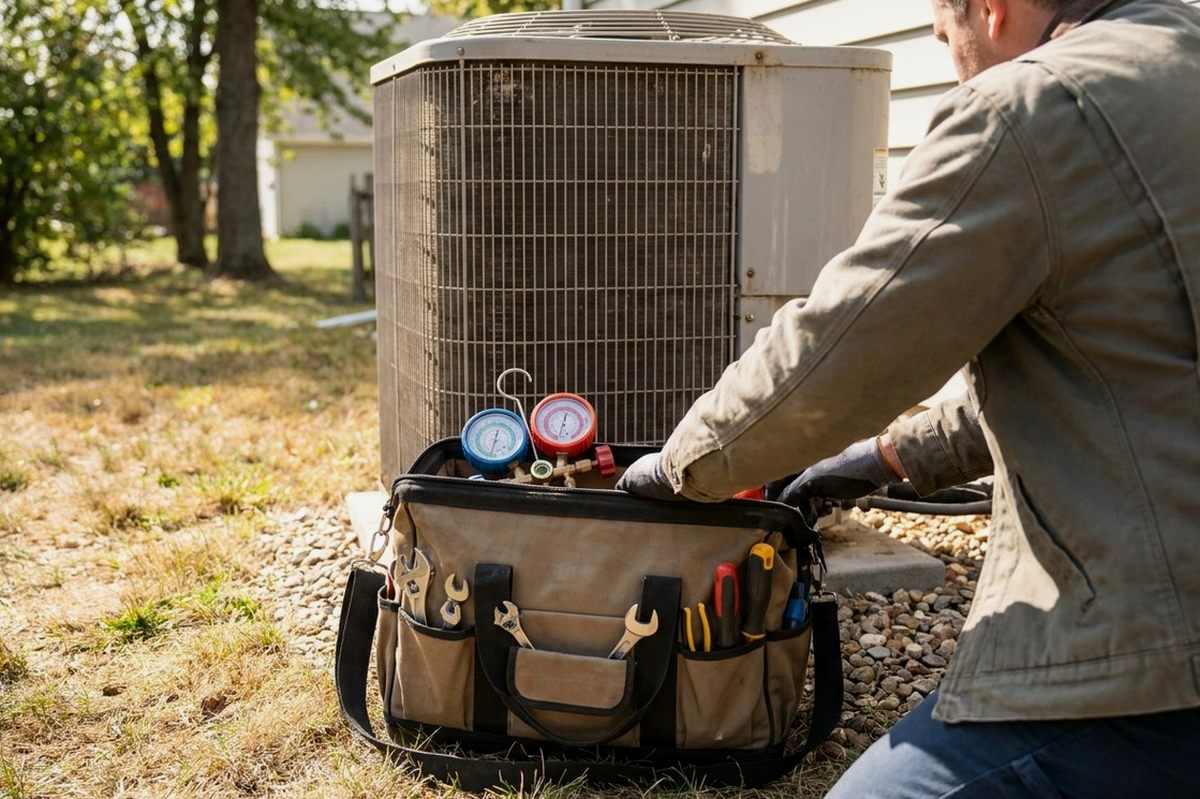
Derby City Comfort service team · field-reviewed before publishing
What the outdoor unit is actually doing out there
That outdoor unit is dumping the heat from inside your house into the air outside. A fan pulls air through the coil on the sides and pushes it out the top. Anything blocking that airflow means heat stays in the system instead of leaving it. Give it room and it works the way it was designed to. Crowd it and the refrigerant pressure climbs, the compressor runs hotter, and the house never quite gets comfortable. In heat pump country across Kentucky, Indiana, Ohio and Tennessee, the same unit runs in January too, so clearance matters year round, not just in summer.
What neglect looks like after two or three seasons
It is gradual, which is why nobody catches it. Year one the shrubs are a foot away. Year three they are touching the cabinet and cottonwood fluff has matted into the coil fins like felt. The unit runs longer for the same result. Longer runtime means more wear on the compressor and the contactor, and higher head pressure than the system was built for. We have pulled panels and found mouse nests in the base, a dryer vent blowing lint straight into the fins, and mulch piled halfway up the cabinet. Every one of those started as a small thing somebody meant to get to.
The simple habit that prevents all of it
Give the unit two feet of open space on every side and five feet of clear air above it, then walk around it once with your eyes. That is the whole habit. Pull weeds and volunteer maples out of the base, rake leaves off the top, and cut back anything reaching toward the cabinet. Keep grass clippings pointed away when you mow. Do not stack firewood, garbage cans, planters or bikes against it, and do not build a decorative box over it. If you want the unit hidden, leave a full gate-width panel you can open for service.
How often to look, and when
Four times a year is plenty for most homes. Late spring before you start running cooling, midsummer after the cottonwood and grass seed have flown, fall once the leaves are down, and again after the first hard freeze to clear snow and ice away from the sides. If you have a big silver maple or a lot of pollen, make it monthly during growing season. Clearing debris around the outdoor unit and changing your filter are the two things a homeowner can safely do without tools. Anything involving the electrical disconnect, refrigerant lines or the panels themselves is ours.
Warning signs it has already gone too far
Call us if the unit runs almost constantly and the house still feels warm and sticky, if the outdoor fan is loud or rattling, if you see ice on the refrigerant lines in summer, or if the breaker trips when the unit tries to start. Fins bent flat, oily residue on the cabinet, or a coil you cannot see daylight through are all reasons to stop and get eyes on it. We handle air conditioning repair, air conditioner repair and heat pump work across the region, and we will tell you straight whether it is a cleaning or a real repair.
Giving the Condenser Room to Breathe — what people ask
Can I spray the outdoor unit with a garden hose?
A gentle rinse from the outside in, with the system off at the thermostat, moves loose surface debris. Do not use a pressure washer, do not open panels, and do not pull the electrical disconnect. Deep coil cleaning is our job.
Is it bad to build a fence or cover around the outdoor unit?
It can be. Solid walls closer than two feet trap the hot air the unit just pushed out and it gets pulled back in. Slatted screens with real spacing and a removable panel for service access work fine.
Should I cover the unit in winter?
A full wrap traps moisture and invites mice. If your system is a heat pump it runs all winter and must stay uncovered. A plywood sheet weighted on top to block falling ice is the most anyone needs.
How it works
- Step 1
Tell us the symptom
Call or fill in the quote form. We ask what changed, when it started, and what the thermostat reads. That short conversation tells us whether you need a visit today or tomorrow morning.
- Step 2
We diagnose on site
A technician checks the thermostat, the electrical side, airflow through the filter and ducts, and the equipment itself. We find the actual cause instead of swapping parts and hoping the noise goes away.
- Step 3
You decide before we work
We explain what failed, what the repair involves, and what we would do if it were our own house. Nothing gets replaced until you say go. Then we test the system before leaving.
- A real person answers
- Open 7 days
- Written quote before work starts
Why homeowners call us
- Old houses and new onesWe are used to century-old homes with retrofitted ductwork and 1970s subdivisions with original returns. Tight crawl spaces, low basement headroom and odd attic runs are normal parts of the day for us, not surprises that stall the job.
- Built for the swingsHumid summers push AC systems hard and January freezes expose weak igniters and cracked flues. We repair for both extremes across the region, so the fix holds when the weather turns instead of failing the first hard week.
- Air conditioning and heating bothAir conditioner repair in July, heating repair in January, and the IAQ and airflow problems that hide in between. One crew that knows how your cooling and heating share the same blower and the same duct system.
- Plain talk, no pressureWe tell you when a repair makes sense and when replacement is the honest answer. No scare tactics about your BTU load, no upsell scripts. You get the condition of the system and a clear next step.
- All major brands, gas & electricEvery major HVAC brand, gas and electric, handled by an independent crew.
- Straight answersIf a system is not worth repairing, we say so, often right on the phone.
About this guide
When the easy checks change nothing, it's time for a tech
Report what you saw during the checks and we handle the rest. A minute to book.
- A real person answers
- Open 7 days
- Written quotes
- All major brands
- Gas & electric
Rather not call? Get a free quote →