
The independent heating and cooling company across Kentucky and the Ohio Valley
Noises From the Condenser and What They Mean
Your AC kicks on and the outdoor unit starts buzzing, rattling, or letting out a screech you can hear through the window. You want to know if it is about to quit, if it is safe to keep running, and what it will take to fix. We repair noisy outdoor units across Illinois, Indiana, Kentucky, Ohio, Tennessee and West Virginia. Here is how we sort out the noise.
Call (888) 414-3292- A real person answers
- Open 7 days
- Written quote before work starts
Taking calls until 5:00 PM ET
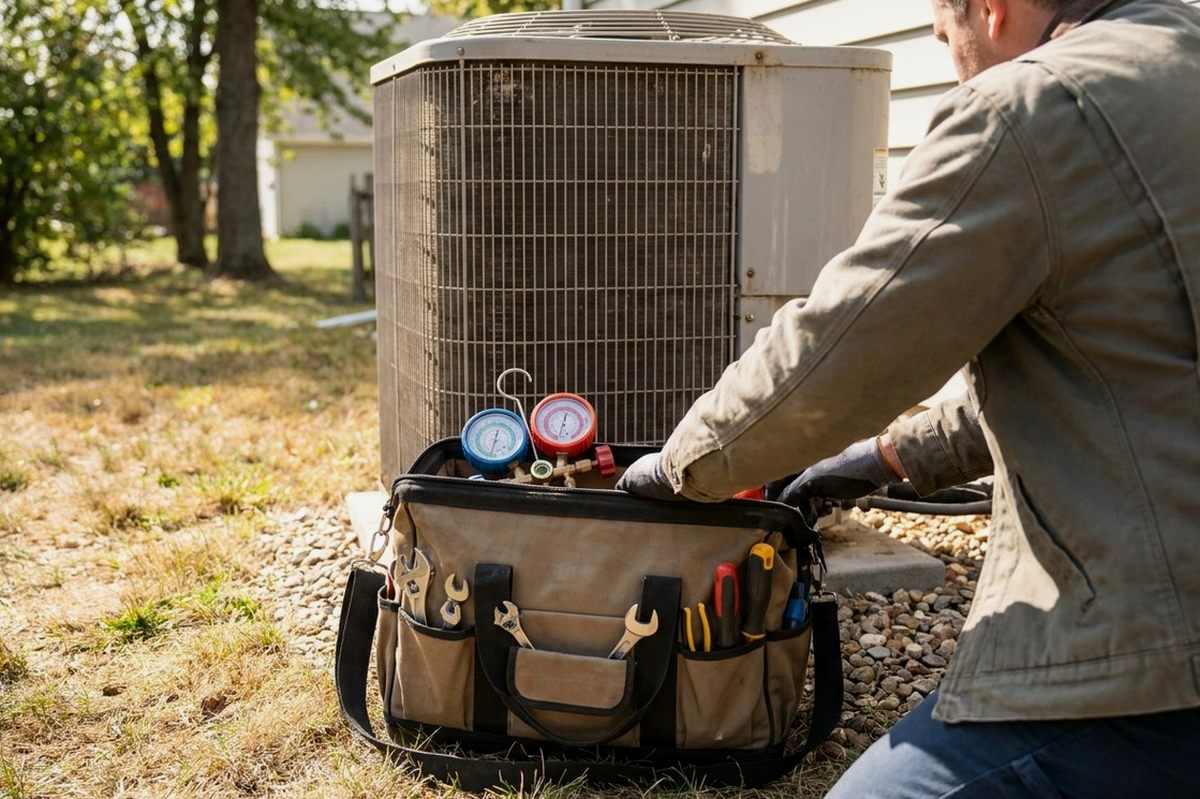
Derby City Comfort service team · field-reviewed before publishing
What the Noise Is Telling You
Different sounds point to different parts. A steady electrical buzz usually comes from a contactor, a failing capacitor, or a motor pulling too much current. A rattle is often loose hardware, a bent fan blade, or debris bouncing around inside the cabinet. Screeching or squealing points at a bearing going dry in the fan motor, or in some cases pressure inside the compressor. A hard clunk on shutdown can be compressor mounts letting go. None of these fix themselves, and a small noise that gets louder over a week is telling you something is wearing through. Note when it happens: startup, mid-cycle, or shutdown. That timing narrows it down fast.
Cause Family One: Loose Hardware and Debris
This is the cheapest and most common cause, and we see it constantly on units that have sat in a side yard for fifteen summers. Screws back out of the sheet metal panels and the whole cabinet buzzes in sympathy with the fan. A stick, a chunk of mulch, or a maple seed pile gets sucked against the coil or into the fan path and clatters. Grass clippings pack the coil until the unit strains. On older units the fan grille can rust loose and vibrate. Fixing this is often an hour of tightening, clearing, and cleaning. If your noise started after a storm or after the yard was mowed, look here first.
Cause Family Two: Electrical Parts Under Load
A humming or buzzing that starts the second the AC calls for cooling usually means an electrical component is struggling. The contactor is the switch that feeds power to the compressor and fan, and when its contacts pit, it chatters and buzzes. A weak run capacitor makes the motor hum without getting up to speed, and you may hear the fan hesitate before it spins. Both are common failures in our climate, where units run hard through humid stretches and then sit through a freeze. These are high-voltage parts that hold a charge even with the power off, so this is not a homeowner repair. Shut the system off at the thermostat and call us.
Cause Family Three: Motors, Bearings and the Compressor
Screeching, grinding, or a rising whine is usually mechanical wear. The condenser fan motor has bearings, and once they run dry they squeal, then howl, then seize. A seized fan motor means the coil cannot shed heat, so the system trips out or the compressor overheats. Compressor noise is different again: a loud growl on startup, a metallic knock, or a hard vibration you feel in the pad. Sometimes that is mounting hardware, sometimes it is internal, and telling those apart takes gauges and amp readings. Running a screeching unit for another few weeks often turns a fan motor job into something much larger, so it is worth a look sooner.
What You Can Safely Check, and What We Do Differently
Safe checks: turn the thermostat off and confirm the noise stops, check the breaker for the outdoor unit, change a loaded filter, clear leaves, weeds and trash back about two feet around the cabinet, and confirm your supply vents inside are open. That is the line. Do not open the electrical panel, do not touch refrigerant lines, and do not reach through the fan grille. When we arrive we measure amp draw on the motor and compressor, test the capacitor, inspect the contactor, check refrigerant pressures, and put hands on the fan and mounts with the power locked out. That tells us whether you need hardware tightened or a part replaced, and we tell you which before we do it.
Noises From the Condenser and What They Mean — what people ask
Can I keep running the AC if it is buzzing?
For a short buzz on startup, usually yes for a day or two. For continuous buzzing, screeching, or grinding, shut it off at the thermostat. Running a failing motor or compressor can turn a modest repair into a replacement.
Why is my outdoor unit loud only when it starts up?
Startup is when the compressor and fan draw the most current, so a weak capacitor or a pitted contactor shows up there first. Loose panels and mounting bolts also rattle hardest during that initial surge.
Is a rattling outdoor unit dangerous?
Usually it is mechanical, not a safety hazard, but never reach into the cabinet to investigate. If you smell gas anywhere near your home, leave the building, call 911 or your gas utility from outside, then call us.
How it works
- Step 1
Tell us the symptom
Call or fill in the quote form. We ask what changed, when it started, and what the thermostat reads. That short conversation tells us whether you need a visit today or tomorrow morning.
- Step 2
We diagnose on site
A technician checks the thermostat, the electrical side, airflow through the filter and ducts, and the equipment itself. We find the actual cause instead of swapping parts and hoping the noise goes away.
- Step 3
You decide before we work
We explain what failed, what the repair involves, and what we would do if it were our own house. Nothing gets replaced until you say go. Then we test the system before leaving.
- A real person answers
- Open 7 days
- Written quote before work starts
Why homeowners call us
- Old houses and new onesWe are used to century-old homes with retrofitted ductwork and 1970s subdivisions with original returns. Tight crawl spaces, low basement headroom and odd attic runs are normal parts of the day for us, not surprises that stall the job.
- Built for the swingsHumid summers push AC systems hard and January freezes expose weak igniters and cracked flues. We repair for both extremes across the region, so the fix holds when the weather turns instead of failing the first hard week.
- Air conditioning and heating bothAir conditioner repair in July, heating repair in January, and the IAQ and airflow problems that hide in between. One crew that knows how your cooling and heating share the same blower and the same duct system.
- Plain talk, no pressureWe tell you when a repair makes sense and when replacement is the honest answer. No scare tactics about your BTU load, no upsell scripts. You get the condition of the system and a clear next step.
- All major brands, gas & electricEvery major HVAC brand, gas and electric, handled by an independent crew.
- Straight answersIf a system is not worth repairing, we say so, often right on the phone.
About this guide
When the easy checks change nothing, it's time for a tech
Mention which checks you ran when you book; it speeds up the visit.
- A real person answers
- Open 7 days
- Written quotes
- All major brands
- Gas & electric
Rather not call? Get a free quote →