
The independent heating and cooling company across Kentucky and the Ohio Valley
The House Feels Clammy Even With the AC Running
The thermostat says 72 but the house still feels like a wet towel. Floors are sticky, the bathroom mirror stays fogged, the bedding never quite dries out. Your AC is running plenty, maybe too much, and it still feels clammy. That is a humidity problem, not a temperature problem, and it usually comes down to airflow, sizing, or moisture sneaking in from somewhere.
Call (888) 414-3292- A real person answers
- Open 7 days
- Written quote before work starts
Taking calls until 5:00 PM ET
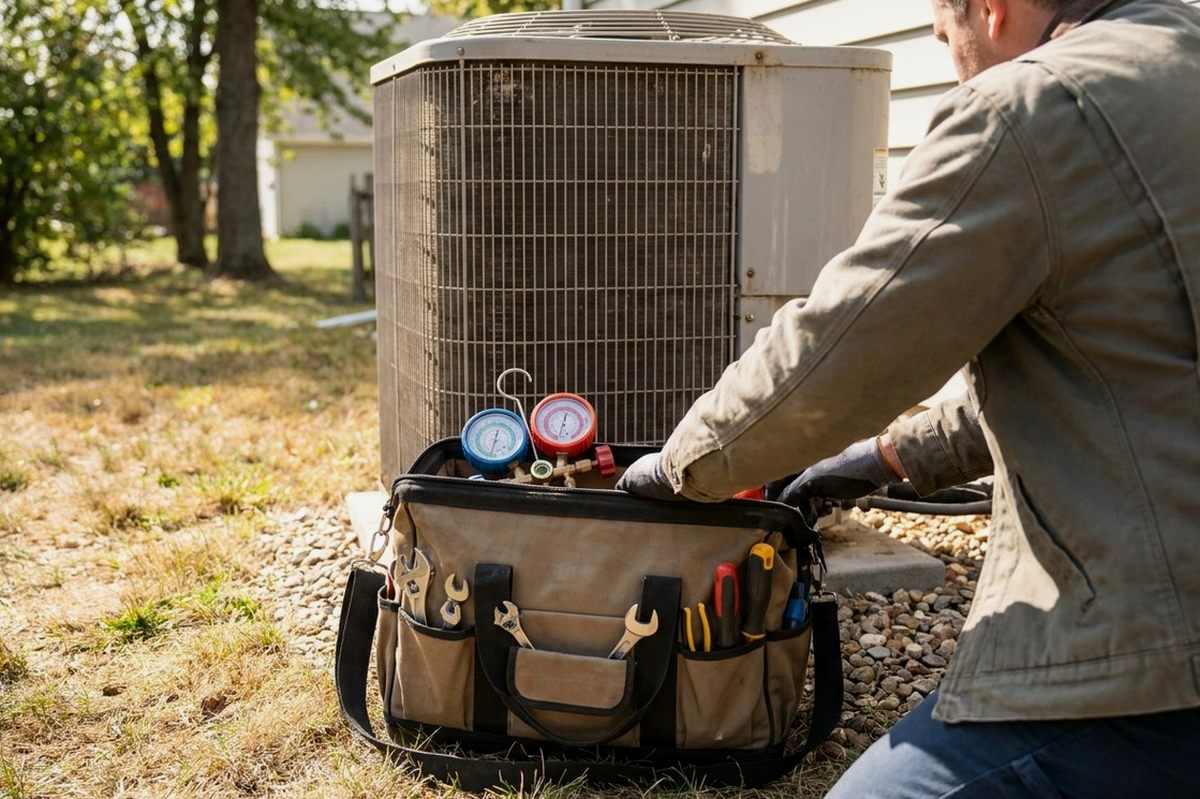
Derby City Comfort service team · field-reviewed before publishing
What Clammy Air Actually Tells Us
An air conditioner cools two ways. It drops the air temperature, and it pulls water vapor out of that air as it passes over a cold coil. When the house hits the set temperature fast but still feels damp, the system is doing the first job and skipping the second. Short cycles do not give the coil time to condense much water. So you get cool, wet air moving around, and that reads on your skin as clammy. In older homes across the region we also see moisture coming up out of basements and crawl spaces faster than any AC can remove it. The fix depends on which of those is happening, so we start with the cheap stuff.
Cause One: Airflow and a Dirty Filter or Coil
This is the cheapest thing to rule out and it is very often the answer. A loaded filter, a crushed flex duct, or a coil furred over with dust all restrict air. Less air across the coil means less contact time and less water pulled out, and in bad cases the coil ices and stops dehumidifying entirely. Closed or blocked supply registers do the same thing from the other end. Change the filter with the correct size and a moderate rating, not the thickest one on the shelf, and open every register in the house. If the air coming out of your vents feels weak, that is a real clue and worth a call.
Cause Two: The System Is Oversized or Cycling Too Fast
A unit with more capacity than the house needs will satisfy the thermostat in eight or ten minutes and shut off. That is not enough runtime to wring water out of the air, so you end up cold and damp at the same time. We see this a lot where a system got replaced with a bigger one because someone was hot upstairs. Fan settings matter too. A blower stuck on continuous can re-evaporate water sitting on the coil and push it right back into the house. Switching the fan from ON to AUTO is a free change worth trying. Beyond that, we look at blower speed, thermostat staging, and whether the equipment matches the load.
Cause Three: Moisture Coming In From Somewhere
Sometimes the AC is fine and the house is just being fed water. Common sources are an unsealed crawl space, a damp basement, a bathroom fan that vents into the attic instead of outdoors, a dryer duct that has come apart, or leaky return ducts pulling humid air from those spaces into the system. Duct leaks are sneaky because the system runs harder and the house still feels swampy. Also check the condensate drain area for standing water. If you see water pooling near the indoor unit or hear gurgling, tell us. A clogged drain can back water up onto the coil and into the air.
What We Do Differently on a Humidity Call
We measure instead of guess. We take temperature and humidity readings at the return and the supply to see how much water the coil is actually removing, check static pressure to find restrictions you cannot see, and verify blower speed against what the system needs. We check refrigerant charge and coil temperature with gauges, which is not homeowner work and never should be. We inspect the condensate path, look for return leaks, and walk the crawl space or basement if there is one. From there we tell you plainly whether it is a filter, a setting, a duct repair, or a sizing problem, and what each option involves. We handle air conditioning repair and heating repair across Illinois, Indiana, Kentucky, Ohio, Tennessee and West Virginia.
The House Feels Clammy Even With the AC Running — what people ask
Should I set the thermostat lower to dry the house out?
Usually not. Lower settings can make the system cycle in short bursts that remove less moisture, and you end up cold and still damp. Longer, steadier runtime removes more water. Switch the fan to AUTO and call us to check airflow.
Will a dehumidifier fix it, or do I need AC repair?
A portable dehumidifier helps a damp basement. It will not fix a restricted coil, a duct leak, or an oversized system. Have the cooling side checked first, then decide if added dehumidification still makes sense for your house.
Why is the humidity worse upstairs?
Warm, moist air rises, and upstairs runs are often long and undersized so less conditioned air reaches them. Attic duct leaks pull hot humid air into the system too. We measure airflow room by room to find where it is going.
How it works
- Step 1
Tell us the symptom
Call or fill in the quote form. We ask what changed, when it started, and what the thermostat reads. That short conversation tells us whether you need a visit today or tomorrow morning.
- Step 2
We diagnose on site
A technician checks the thermostat, the electrical side, airflow through the filter and ducts, and the equipment itself. We find the actual cause instead of swapping parts and hoping the noise goes away.
- Step 3
You decide before we work
We explain what failed, what the repair involves, and what we would do if it were our own house. Nothing gets replaced until you say go. Then we test the system before leaving.
- A real person answers
- Open 7 days
- Written quote before work starts
Why homeowners call us
- Old houses and new onesWe are used to century-old homes with retrofitted ductwork and 1970s subdivisions with original returns. Tight crawl spaces, low basement headroom and odd attic runs are normal parts of the day for us, not surprises that stall the job.
- Built for the swingsHumid summers push AC systems hard and January freezes expose weak igniters and cracked flues. We repair for both extremes across the region, so the fix holds when the weather turns instead of failing the first hard week.
- Air conditioning and heating bothAir conditioner repair in July, heating repair in January, and the IAQ and airflow problems that hide in between. One crew that knows how your cooling and heating share the same blower and the same duct system.
- Plain talk, no pressureWe tell you when a repair makes sense and when replacement is the honest answer. No scare tactics about your BTU load, no upsell scripts. You get the condition of the system and a clear next step.
- All major brands, gas & electricEvery major HVAC brand, gas and electric, handled by an independent crew.
- Straight answersIf a system is not worth repairing, we say so, often right on the phone.
About this guide
When the easy checks change nothing, it's time for a tech
Report what you saw during the checks and we handle the rest. A minute to book.
- A real person answers
- Open 7 days
- Written quotes
- All major brands
- Gas & electric
Rather not call? Get a free quote →