
The independent heating and cooling company across Kentucky and the Ohio Valley
Closing Vents to Save Money
You have a spare bedroom nobody sleeps in, or a basement you only visit to swap a filter. Closing those vents feels like free money. Short answer: leave them open. Your heating and cooling system was sized for the whole house, and shutting registers works against it. Here is what happens over time, and the warning signs that damage has already started.
Call (888) 414-3292- A real person answers
- Open 7 days
- Written quote before work starts
Taking calls until 5:00 PM ET
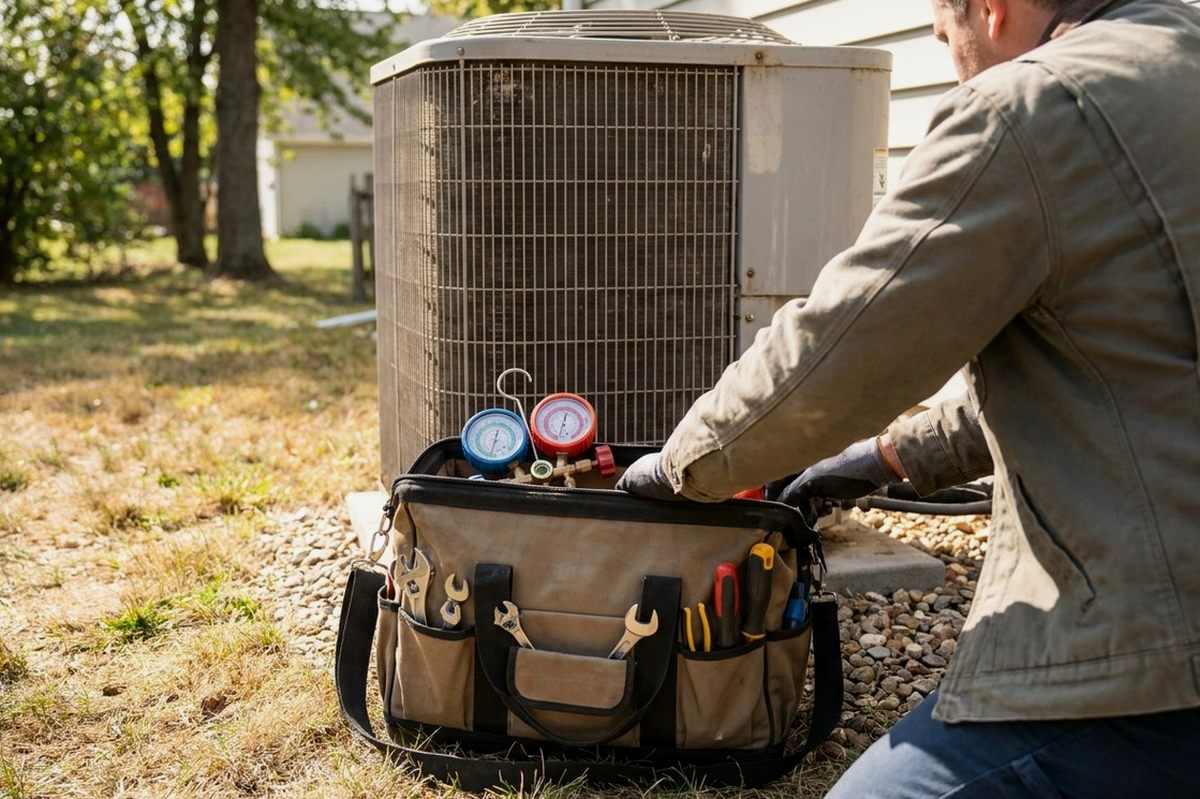
Derby City Comfort service team · field-reviewed before publishing
What Closed Vents Actually Do to Your System
Your blower moves a set volume of air no matter how many registers are open. Close several and that air has nowhere to go, so static pressure climbs inside the ductwork. In summer the indoor coil gets less airflow across it, runs colder than designed, and can ice over. In winter the heat exchanger holds onto heat it was meant to hand off to moving air, which trips the high limit switch and short cycles the furnace. Neither shows up the first week. Both wear parts down over a season or two, and older duct systems in homes across Kentucky, Indiana and Ohio leak that extra pressure straight into crawlspaces and attics.
The Simple Habit: Open Everything, Then Balance
Walk the house and open every supply register fully, including closets, halls and the finished basement. Then check that furniture, rugs and curtains are not sitting on top of them. If one room still runs hot or cold, the fix is balancing, not closing. Most duct systems have dampers on the branch runs near the furnace or air handler, and those are meant to be adjusted a little, not slammed shut. Small changes, then wait a full day before judging. Return air matters too, so keep interior doors open or cracked in rooms with a single supply and no return path.
How Often to Check
Twice a year is plenty for most homes. Do one walkthrough in spring before the humid stretch and one in fall before the first hard freeze, and pair it with a filter change so you only have to remember one chore. If you rearrange furniture, moved a bed over a floor register, or finished a basement room, check again right away. Households with kids often find registers closed by hand over the winter, so a quick look in January is worth the five minutes. Write the date on the filter edge in marker. It saves the guessing game next season.
Warning Signs It Has Already Gone Too Far
Listen and look before you call. A whistling or roaring sound at the registers means the system is fighting restriction. Rooms that never reach the thermostat setting, a furnace that runs three minutes and quits, or an outdoor unit that keeps running while the air from the vents turns weak all point to airflow trouble. Ice on the refrigerant line at the indoor coil is a clear one, and so is a puddle near the air handler after that ice melts. Higher humidity indoors during a muggy July is another. Any of these and it is time for air conditioning repair or heating repair rather than more vent fiddling.
When to Call Us
We handle air conditioner repair, heater repair and duct airflow problems for homeowners across Illinois, Indiana, Kentucky, Ohio, Tennessee and West Virginia. If you have opened every register, changed the filter, cleared debris away from the outdoor unit and confirmed the thermostat is set correctly, and rooms are still uneven, the issue is in the ducts or the equipment. We measure static pressure and temperature split rather than guessing. If you ever smell gas or a carbon monoxide alarm sounds, get everyone outside first, call 911 or your gas utility from outside, and call us after the scene is safe.
Closing Vents to Save Money — what people ask
Does closing vents save money on heating and cooling?
Not in practice. The blower still moves the same air, pressure builds in the ducts, and leaky ductwork pushes conditioned air into unconditioned space. Any small gain is usually erased by longer run times and added wear.
Can I close one vent in a single room?
One register in a large house rarely causes harm, but even then we would rather adjust the branch damper slightly. If you close more than one or two, you start seeing real airflow restriction and uneven temperatures.
Why is one bedroom always hotter than the rest?
Usually undersized duct, a long run, or no return path when the door is shut. Sun exposure and attic insulation play a part too. A technician can measure airflow at that register and find the actual cause.
How it works
- Step 1
Tell us the symptom
Call or fill in the quote form. We ask what changed, when it started, and what the thermostat reads. That short conversation tells us whether you need a visit today or tomorrow morning.
- Step 2
We diagnose on site
A technician checks the thermostat, the electrical side, airflow through the filter and ducts, and the equipment itself. We find the actual cause instead of swapping parts and hoping the noise goes away.
- Step 3
You decide before we work
We explain what failed, what the repair involves, and what we would do if it were our own house. Nothing gets replaced until you say go. Then we test the system before leaving.
- A real person answers
- Open 7 days
- Written quote before work starts
Why homeowners call us
- Old houses and new onesWe are used to century-old homes with retrofitted ductwork and 1970s subdivisions with original returns. Tight crawl spaces, low basement headroom and odd attic runs are normal parts of the day for us, not surprises that stall the job.
- Built for the swingsHumid summers push AC systems hard and January freezes expose weak igniters and cracked flues. We repair for both extremes across the region, so the fix holds when the weather turns instead of failing the first hard week.
- Air conditioning and heating bothAir conditioner repair in July, heating repair in January, and the IAQ and airflow problems that hide in between. One crew that knows how your cooling and heating share the same blower and the same duct system.
- Plain talk, no pressureWe tell you when a repair makes sense and when replacement is the honest answer. No scare tactics about your BTU load, no upsell scripts. You get the condition of the system and a clear next step.
- All major brands, gas & electricEvery major HVAC brand, gas and electric, handled by an independent crew.
- Straight answersIf a system is not worth repairing, we say so, often right on the phone.
About this guide
Checked everything on the list and it still acts up?
Report what you saw during the checks and we handle the rest. A minute to book.
- A real person answers
- Open 7 days
- Written quotes
- All major brands
- Gas & electric
Rather not call? Get a free quote →